01
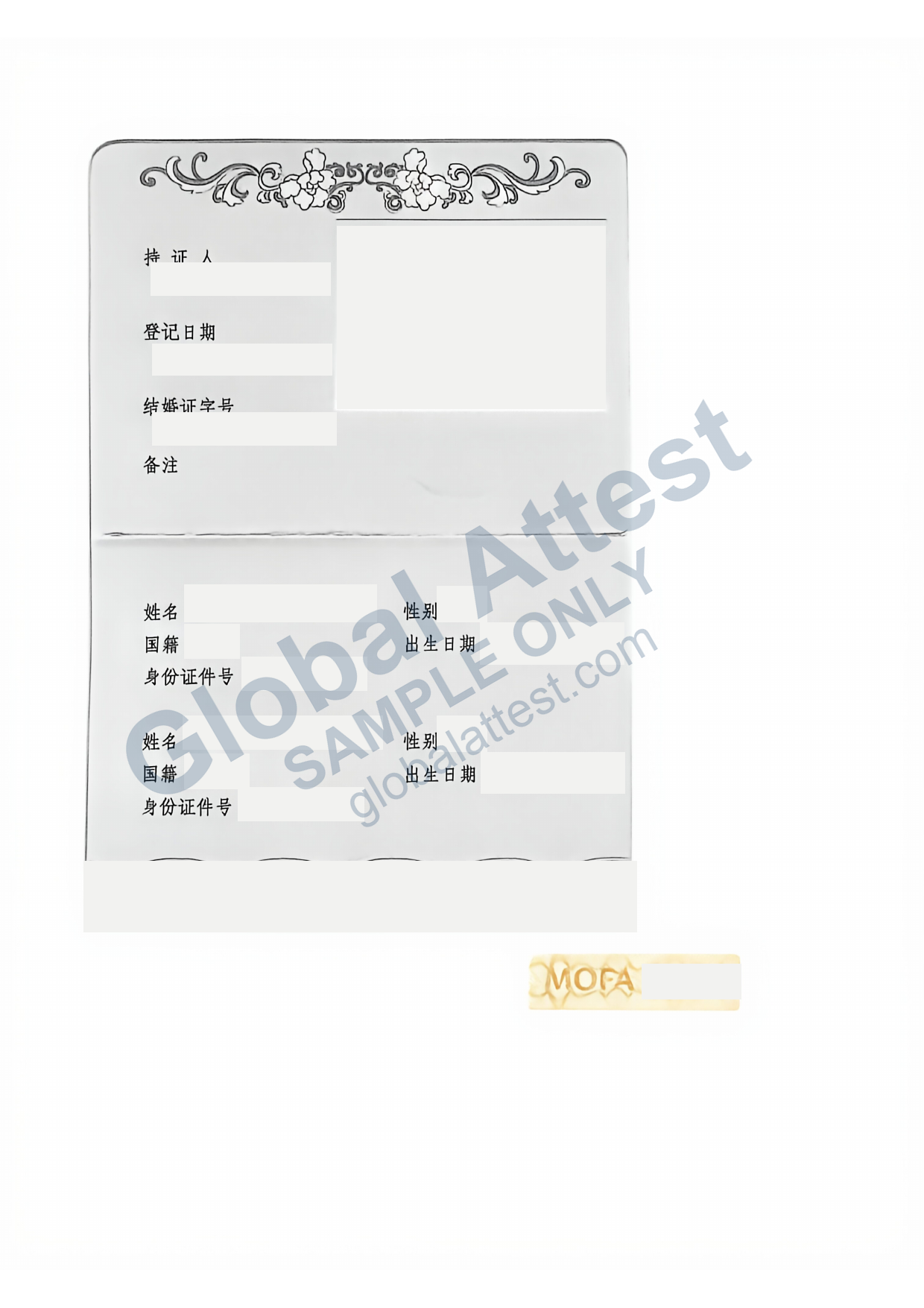
Marriage Certificate Holder Information
Page 4 · Holder information from the marriage certificate. Names, both portraits, dates and document numbers are removed.
View SampleREAL DOCUMENTS · CHINA–UAE CASE
Explore a real, permanently redacted China–UAE consular legalization document set and understand how embassy authentication appears on notarized Chinese documents.
Marriage-document example · Reference only
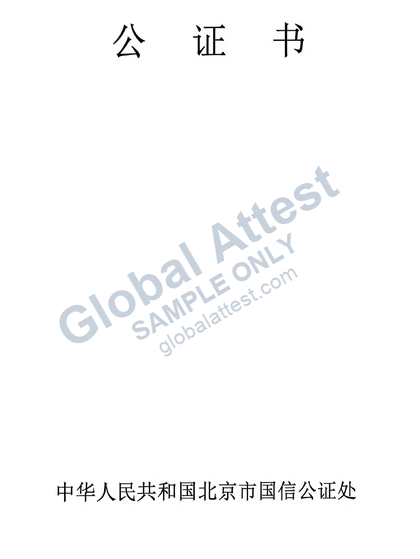
This page displays embassy authentication and embassy legalization samples, including underlying document pages, notarial pages, translations, authentication stickers, signatures, stamps and seals. For the complete route and terminology, read the China Embassy Legalization Guide.
The gallery uses a redacted marriage-document bundle and a UAE consular authentication example to illustrate how several document and authentication stages may appear together.
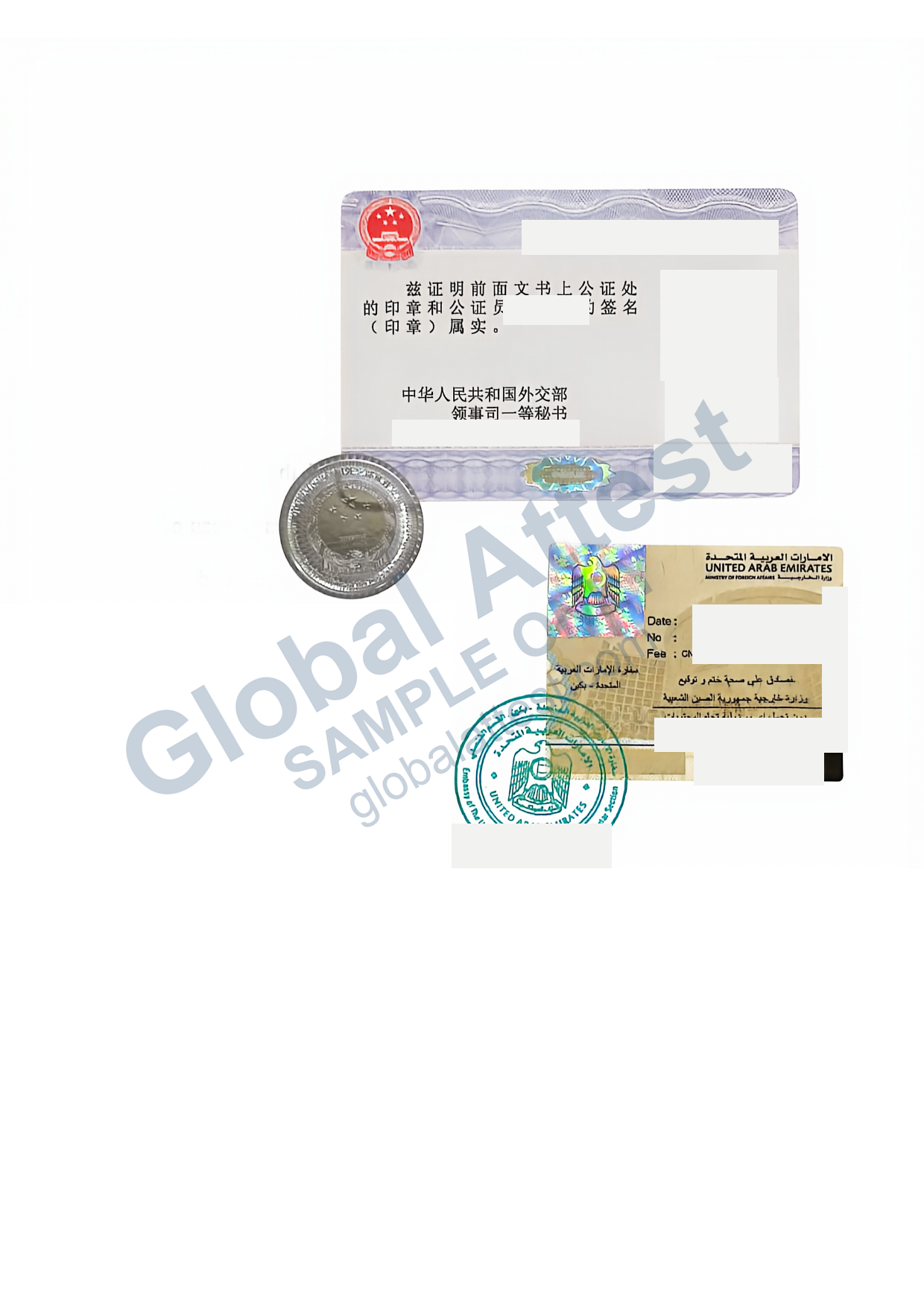
Page 9 brings together the Chinese consular authentication label and UAE authentication sticker and stamp. Personal information, verification codes, unique references and signatures have been permanently removed.
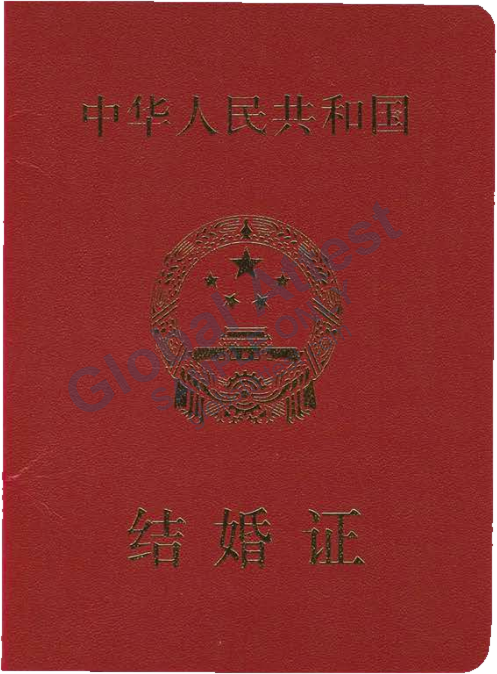
SOURCE DOCUMENT: MARRIAGE CERTIFICATE
The thumbnail crops blank margins; the full image retains the complete scanned page. Removed signature strokes partly overlap the lower stamp; that area is intentionally obscured.
Four key pages show how the documents relate in this supplied case. They do not prescribe an identical process for every country or document.
Page 4 · Holder information from the marriage certificate. Names, both portraits, dates and document numbers are removed.
View Sample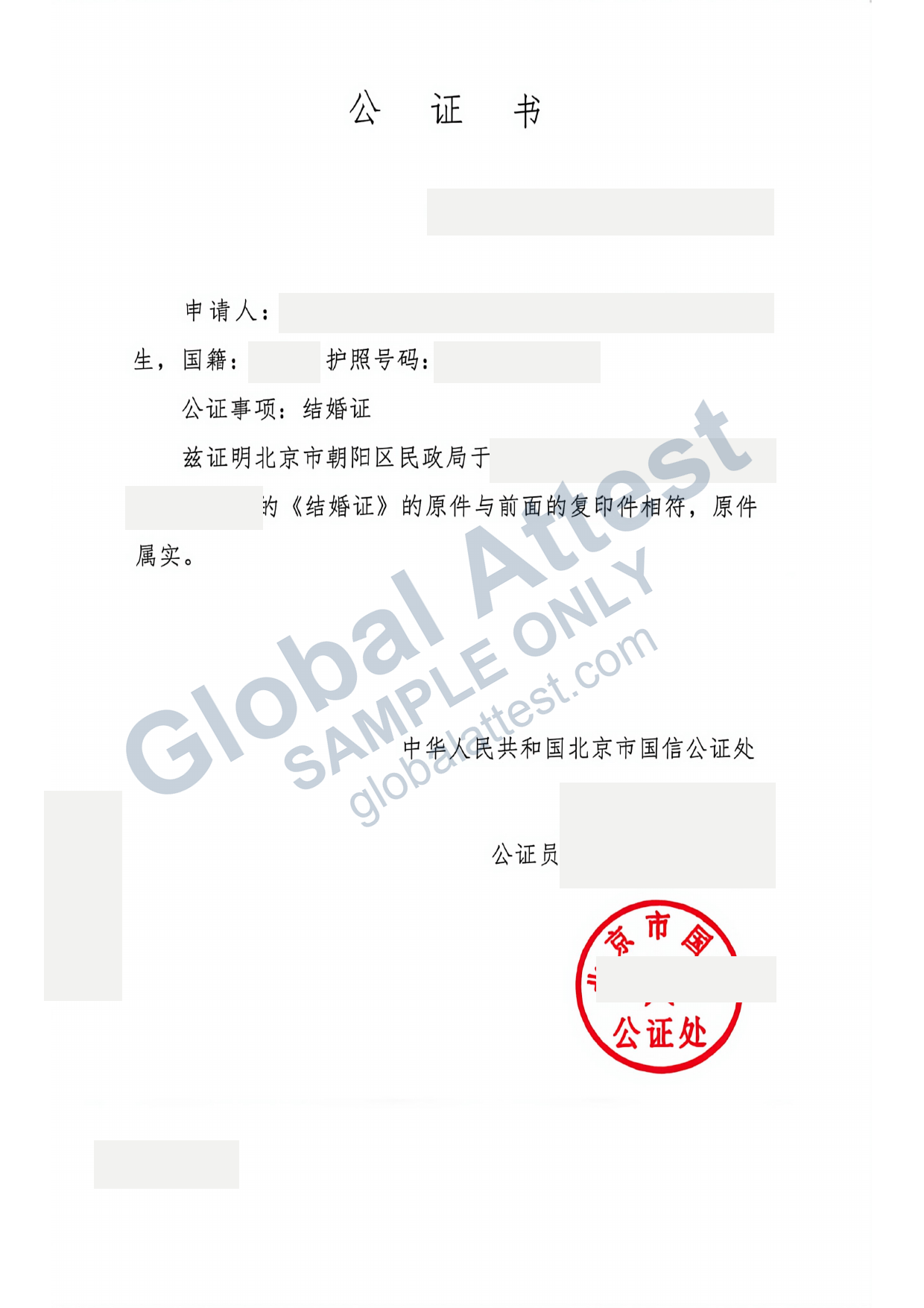
Page 6 · The Chinese notarial statement. This is a notarial document, not an Apostille.
View Sample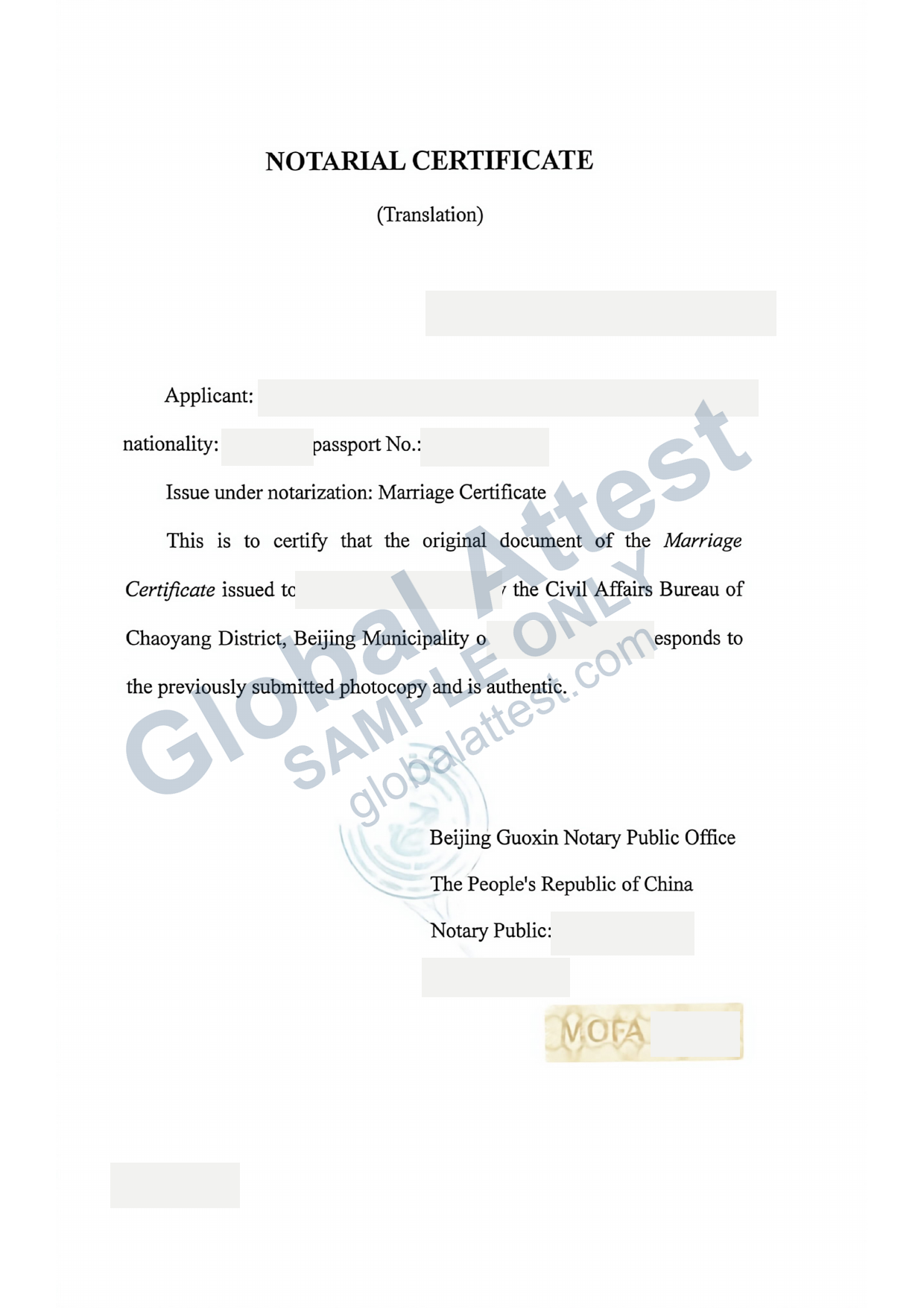
Page 8 · English translation of the notarial statement; a translation is not itself consular legalization.
View SamplePage 9 · Chinese and UAE authentication marks on the same document set.
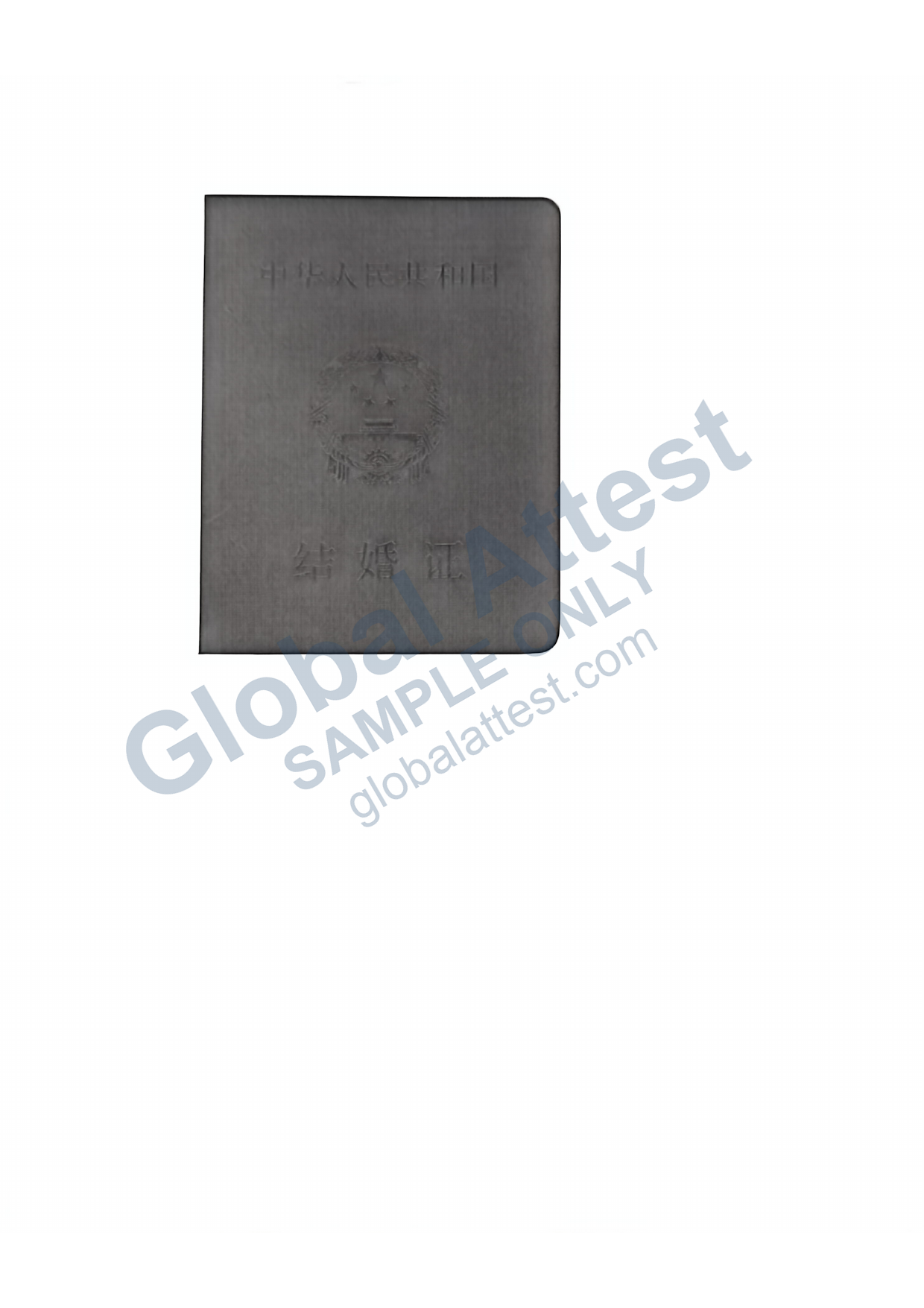
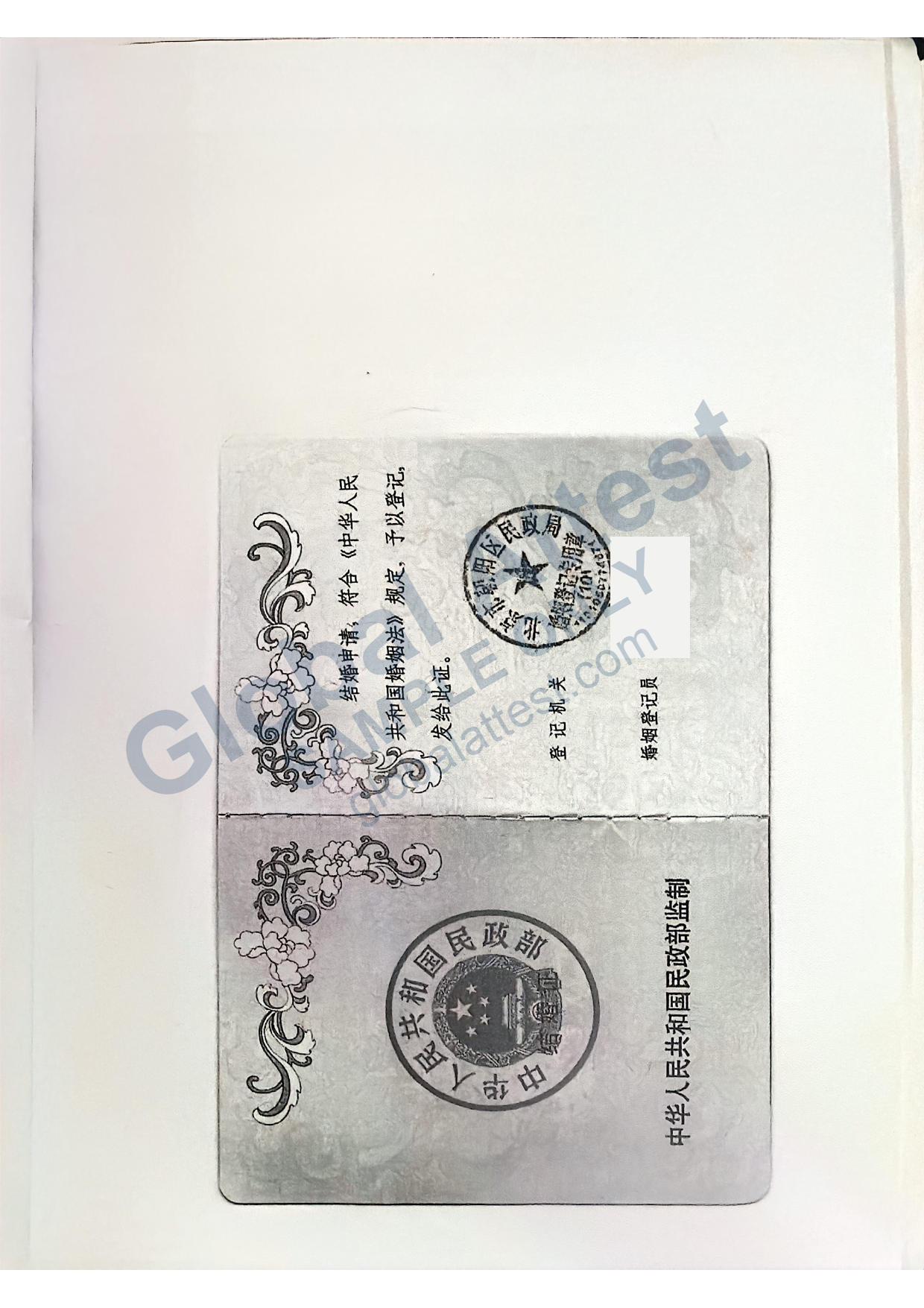
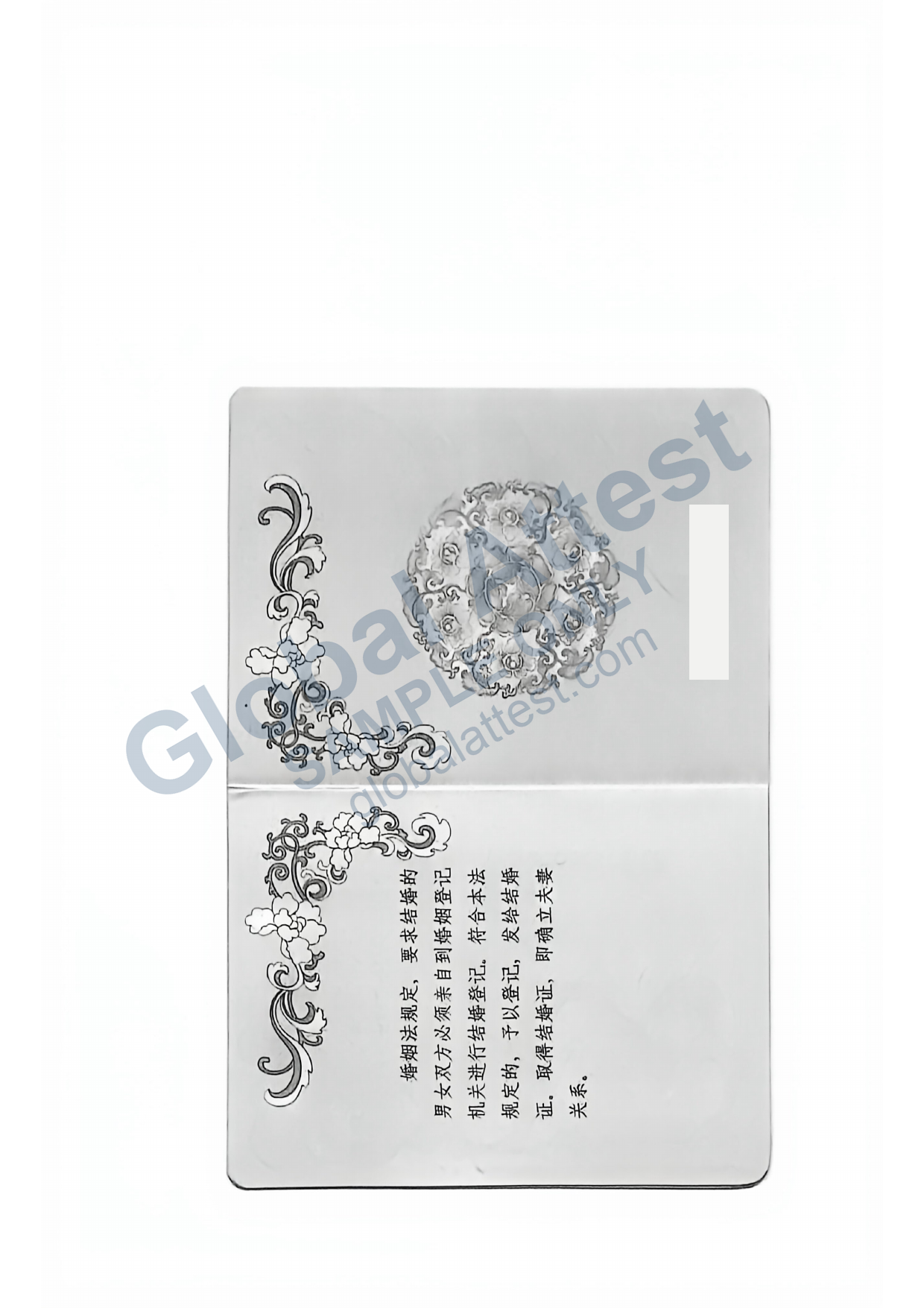
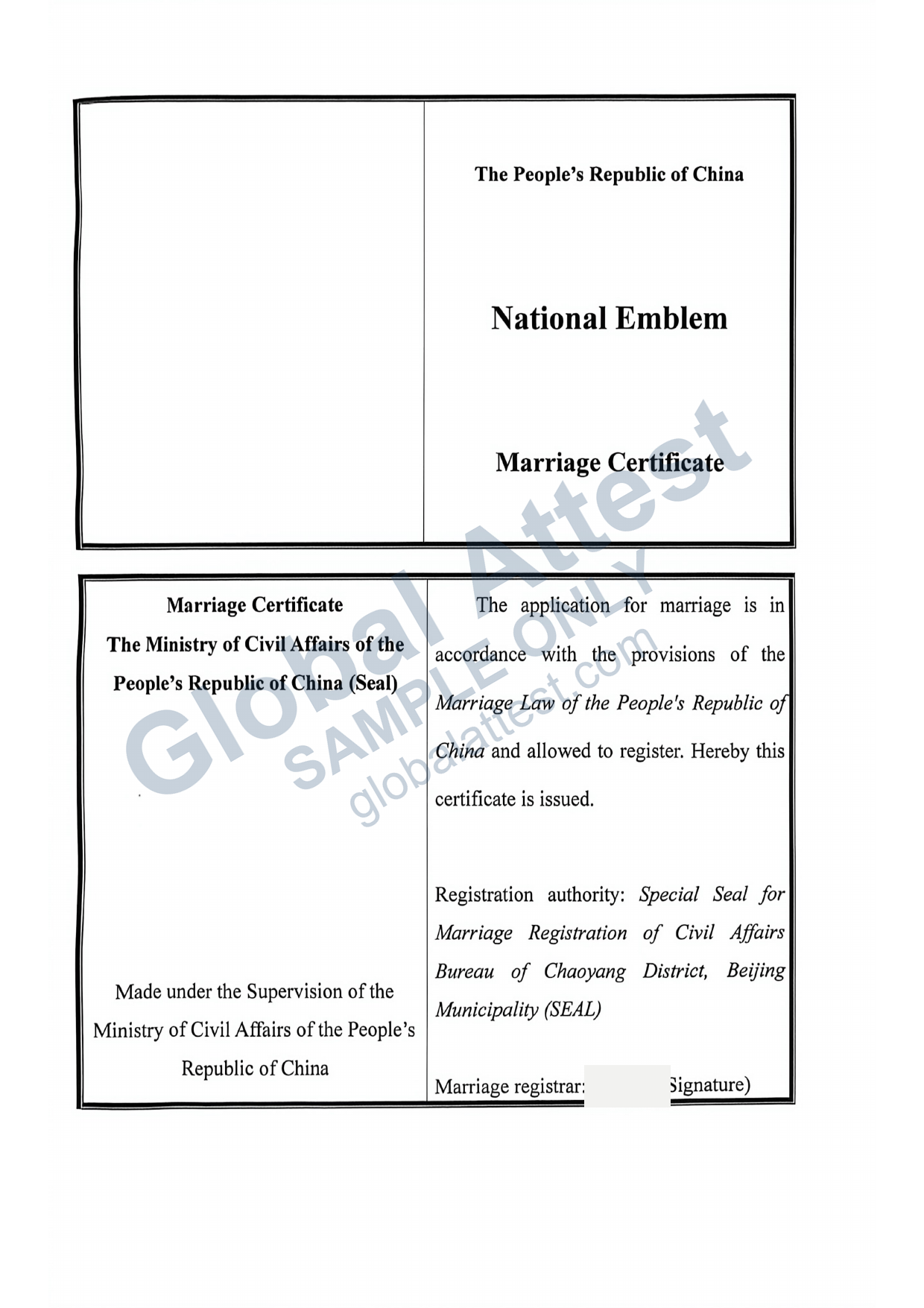
View SampleThe marriage certificate cover, inside page and holder-information page show the civil document before later authentication marks are reviewed.
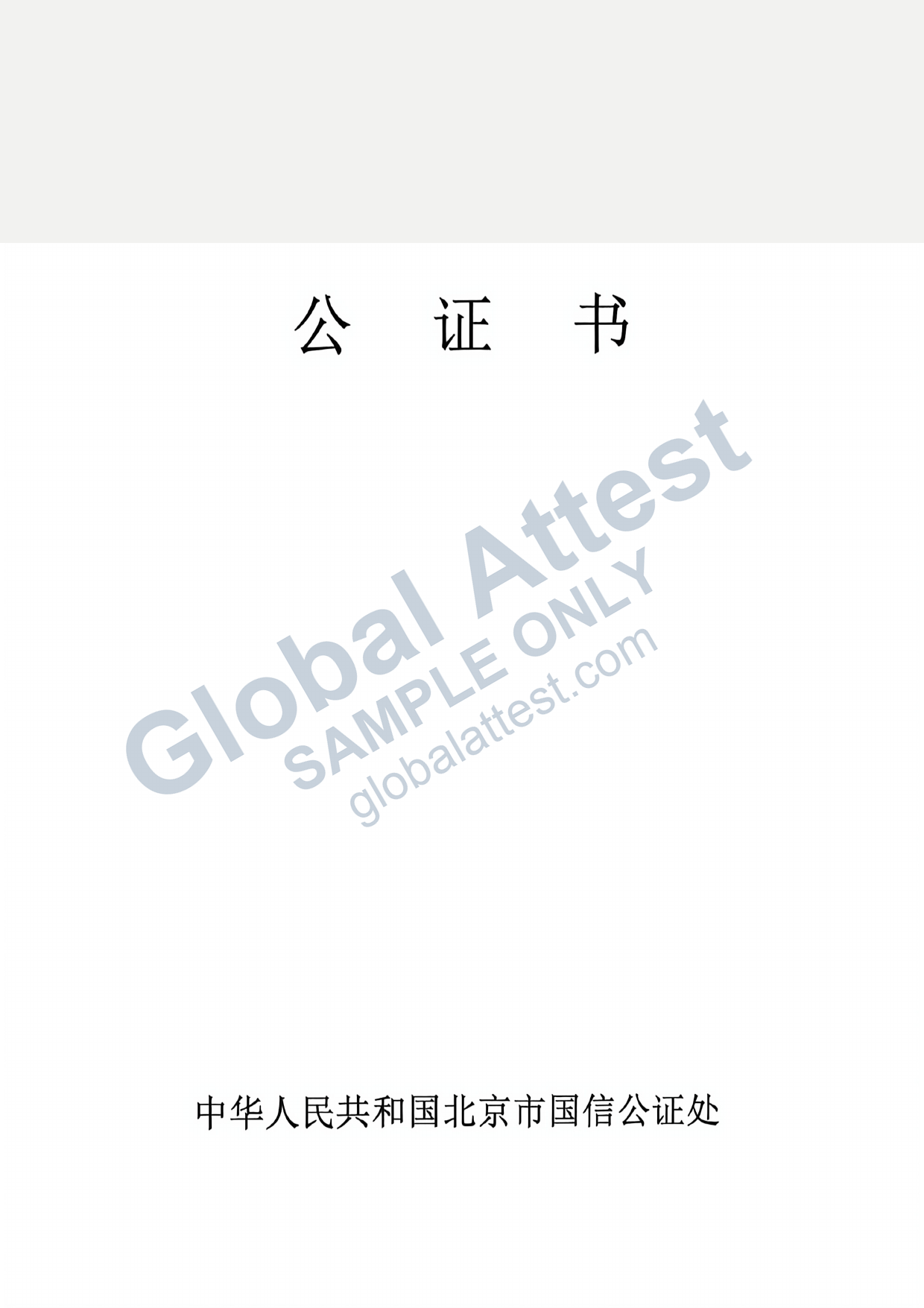
The notarial cover and Chinese notarial page illustrate a typical notarized document bundle and the placement of a notarial seal and signature.
The English pages show how translated content may be included. Translation is a separate element and should be checked against the source document.
The final sample illustrates stickers, seals, dates and signatures associated with later authentication and consular stages.
The sample set below shows different parts of one redacted document bundle. Each image represents a document or authentication stage; seals and signatures may appear in different locations in other cases.
The remaining five pages preserve the cover, civil-document format and general translation layout. Every enlargement opens a safe WebP, never the original PDF.
For commercial help preparing the consular route, see our China embassy legalization service.
A notarial page may certify a document, copy, signature or translation. It is an earlier stage and is not the same as embassy legalization.
An authentication mark generally confirms the preceding official signature, seal or authority in the document chain.
An embassy or consulate may add a sticker, stamp, seal, signature or attached certificate for use in the destination country.
Review the attached pages together. A seal or sticker should be connected to the correct document rather than assessed in isolation.
Traditional consular legalization may be required where the Apostille Convention does not apply between China and the destination country or does not cover the document, subject to applicable exemptions. It may include several attached authentication stages.
Within the Apostille Convention's scope as applicable between China and the destination country, including its territorial application, an apostille replaces traditional diplomatic or consular legalization unless authentication is waived. Read the China Apostille Guide and compare certificate formats in the China Apostille Samples.
| What to check | Apostille | Embassy / Consular Legalization |
|---|---|---|
| Applicability | Covered public documents where the Convention is in force and applicable between the relevant places, unless authentication is waived. | May be required outside the applicable Convention route, subject to exemptions and destination instructions. |
| Formal purpose | Authenticates the relevant signature, signer’s capacity and, where appropriate, seal or stamp. | Confirms the relevant formal origin through the applicable authentication chain. |
| Separate requirements | Translation, document content, issue date, document form and submission requirements remain subject to the receiving institution. | |
The supplied page shows markings on one document set. Check current official arrangements and the receiving authority’s instructions for China–UAE use; the image alone cannot establish that every Chinese document needs this route.
Official references: HCCH Convention status and declarations; China MFA implementation announcement; UAE MoFA attestation service.
These answers explain sample formats and document use; they are not a guarantee of a particular application outcome.
Embassy authentication, often called embassy or consular legalization in this context, is a stage used to prepare an authenticated document for use in a destination country. It may follow notarization and another government authentication step. The embassy or consulate generally confirms the preceding seal or signature in the chain; it does not verify every factual statement in the underlying document.
Appearance varies. A document bundle may include a notarial certificate, translation pages, authentication stickers, official seals, signatures, dates or an attached legalization certificate. Some marks appear on a separate page while others are placed directly on the authenticated document. This page uses real redacted examples, but no single layout should be treated as universal.
Yes. Different embassies and consulates may use different stickers, stamps, languages, certificate numbers, signatures or page layouts. The format may also change by document type, date and authentication route. Review the complete document chain and compare it with the receiving authority's instructions rather than expecting every legalization certificate to match one sample.
No. First confirm whether the Apostille Convention applies between China and the destination country and covers the document, including its territorial application. Within that scope, an apostille replaces traditional diplomatic or consular legalization unless authentication is waived. Outside that scope, traditional consular legalization may be required, subject to applicable exemptions. Notarization, translation and submission requirements should be checked separately.
Check visible seals, signatures, dates, certificate or reference numbers, the document description, stated country and issuing authority. Make sure attached pages and stickers remain connected to the correct document and personal details agree throughout. If a QR code or official verification instruction is present, use only the official channel identified by the issuing authority; online verification is not available for every document.
No. Seals can differ by notary, authentication authority, embassy or consulate, destination, date and document type. A legalized bundle may contain several seals representing separate stages, and some stages may use stickers or attached certificates instead. Focus on whether each mark belongs to the correct document chain, not whether it looks identical to another sample.
No. It records the visible markings on one marriage-document set. It does not establish the current authentication route for every Chinese document used in the UAE. Check current official instructions, Convention applicability, exemptions and the receiving authority’s requirements for your document.
No. The applicable route depends on the destination, document type, Convention applicability, exemptions and the receiving institution. Notarization, translation and submission requirements should be checked separately.
It may be requested as part of an overseas submission, but notarization alone does not establish acceptance. Confirm which original or notarial form, language, authentication route and issue-date requirements the receiving institution specifies.
Some procedures may allow an authorized representative, depending on the document, available originals, identity checks and authority rules. Do not assume every step can be completed remotely. Confirm the applicable requirements before sending documents.
Use the guide and sample pages that match the document and destination. For education records that may need preliminary preparation, see the Degree Certification Guide.
Compare the appearance of a different authentication certificate.
Explore resource →Explore assistance with the applicable consular route.
Explore resource →Review assistance where the Apostille route applies.
Explore resource →Read about requirements and general procedures.
Explore resource →Understand Convention scope and document preparation.
Explore resource →Read about education-document preparation.
Explore resource →Browse further document samples and references.
Explore resource →Confirm the destination, document type and receiving authority instructions before relying on a sample format.
DOCUMENT ROUTE REVIEW
Tell us your document type, destination country, and receiving authority’s requirements. We can help review the appropriate authentication route.